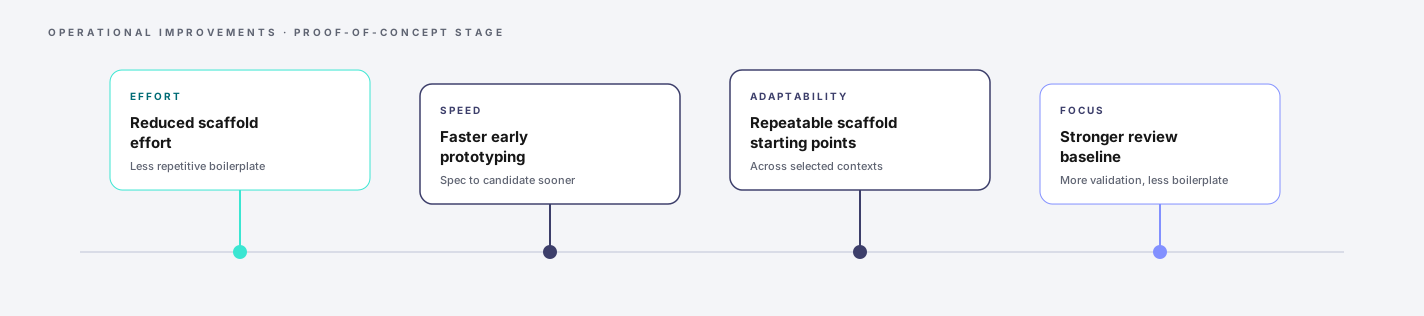
Hardware development often slows down at the point where software needs to meet the physical product. Every active component needs driver code that reflects how it operates, how it communicates, and how it fits into the wider system. For engineering teams, that work can be repetitive, detailed, and time-consuming. It can also slow down prototyping when new components need to be tested quickly. InspireX developed an AI-driven proof of concept to explore driver scaffolding for hardware components. The goal was to demonstrate a path to reducing repetitive driver scaffolding effort, accelerating early prototyping, and giving engineers a stronger starting point for review and validation.
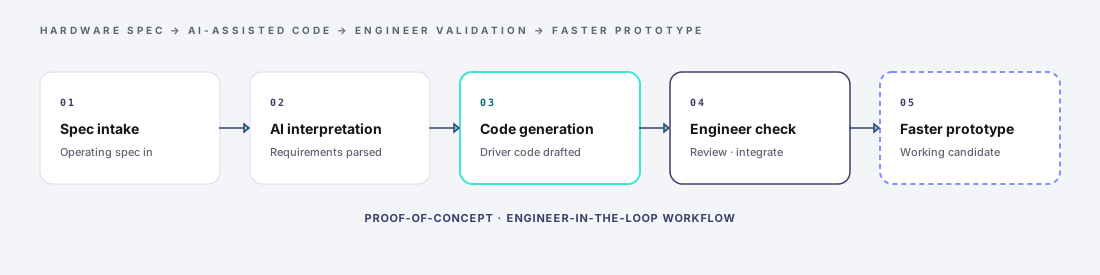
Developing and integrating hardware components often involves manual coding for each active component. Display drivers, sound drivers, peripherals, and other circuit elements may each require specific driver logic based on their operating requirements. That work matters. Driver code needs to be accurate, maintainable, and reliable. But when engineers are repeatedly creating similar implementation patterns across different components, valuable time can be lost before the team even reaches deeper integration or product testing. The challenge was to use AI in a practical way: not to replace engineering judgement, but to reduce repetitive effort and create a stronger starting point for development.
InspireX's AI-driven code generation approach is designed to create driver scaffolds based on hardware operating specifications. By interpreting component requirements, the system can help generate a stronger starting point for hardware integration. In the proof of concept, the workflow demonstrated how a display-driver scaffold could be generated from a component operating specification for engineer review and validation. The solution is also designed around adaptability: a repeatable starting point for component-specific driver scaffolds across selected integration contexts, including display drivers, sound drivers, and other peripherals. Generated code still needs to be checked, validated, and integrated into the wider product workflow. The benefit is that engineers can start from a stronger baseline, reducing repetitive implementation effort while keeping review, testing, and integration decisions under human control.
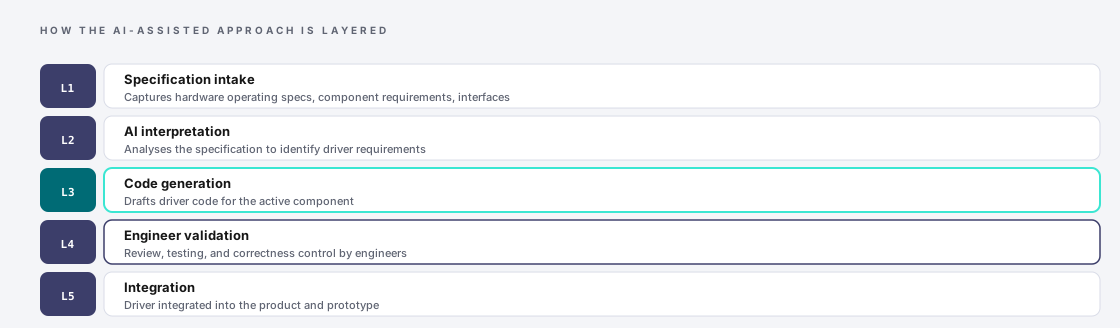
The AI-driven approach demonstrates a path to reducing repetitive implementation effort while keeping engineering review, testing, and integration decisions under human control. That can help teams move faster through early prototyping and integration while keeping reliability and validation at the centre of the process. For hardware and AV product teams, faster driver scaffolding can support quicker experimentation, smoother review cycles, and better use of specialist engineering time.
This case study reflects a broader InspireX capability: applying AI where it can solve a real engineering problem. The value is not AI for its own sake. It is AI used to support a specific workflow, reduce delivery friction, and help engineers make better product development decisions.
For a related example in AV device control, see InspireX's AI Integration Accelerator for AV Device Control.


InspireX Pty Ltd
Level 8
97 Creek Street
Brisbane City QLD 4000


