Turning technical documentation into working AV and UC device integrations faster.
Snapshot: From Documentation to Working Integration Code
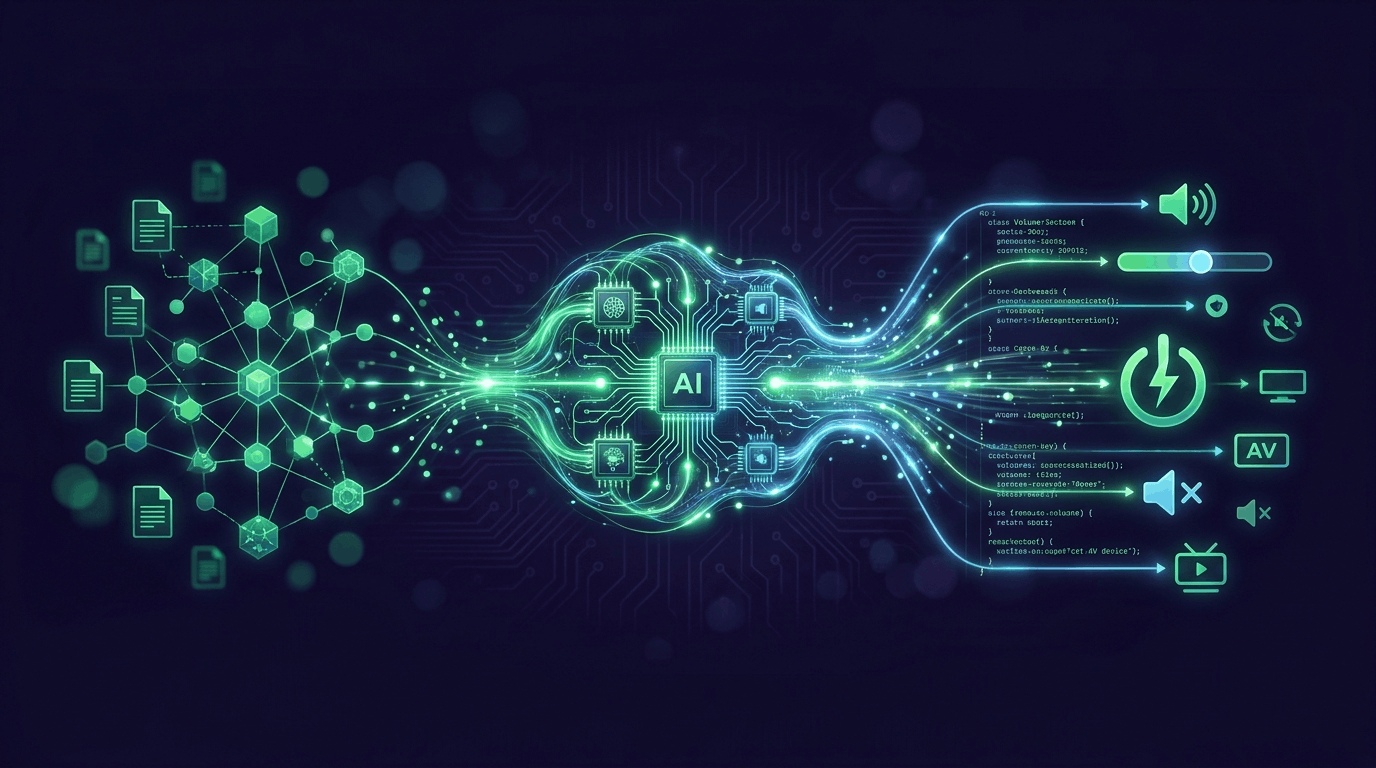
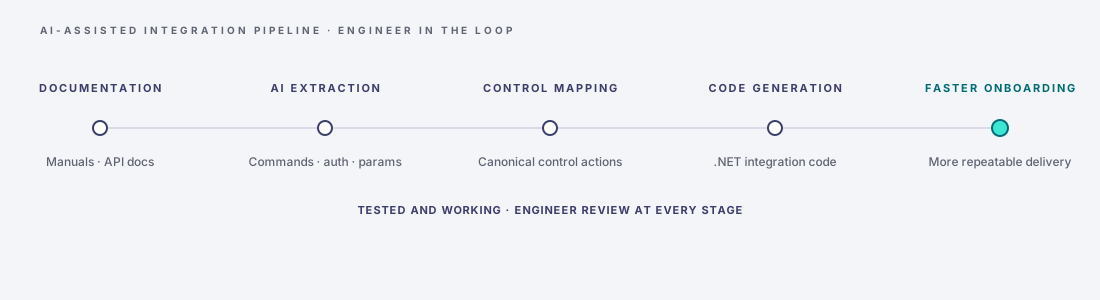
AV and UC platforms need to integrate with a wide range of devices, vendors, and protocols — and every new device brings another manual, another API style, and another round of hand-written integration code. InspireX built an AI-assisted integration accelerator that reads device documentation, extracts integration-relevant detail, maps it to standard control actions, and generates working integration code for the target control system's native tech stack — with engineers reviewing and validating every output.
ENGAGEMENT TYPE
Completed AI-assisted integration platform
DOMAIN
Professional AV, unified communications, device control, and applied AI
DELIVERABLES
AI extraction · Structured specs · Canonical control layer · Code generation · Engineer validation
TEAM SHAPE
Software engineering team with AI workflow, integration, and device control expertise
OUTCOME
A faster, more repeatable path from device documentation to working integration code
Challenge: Integration work was too dependent on manual documentation review.
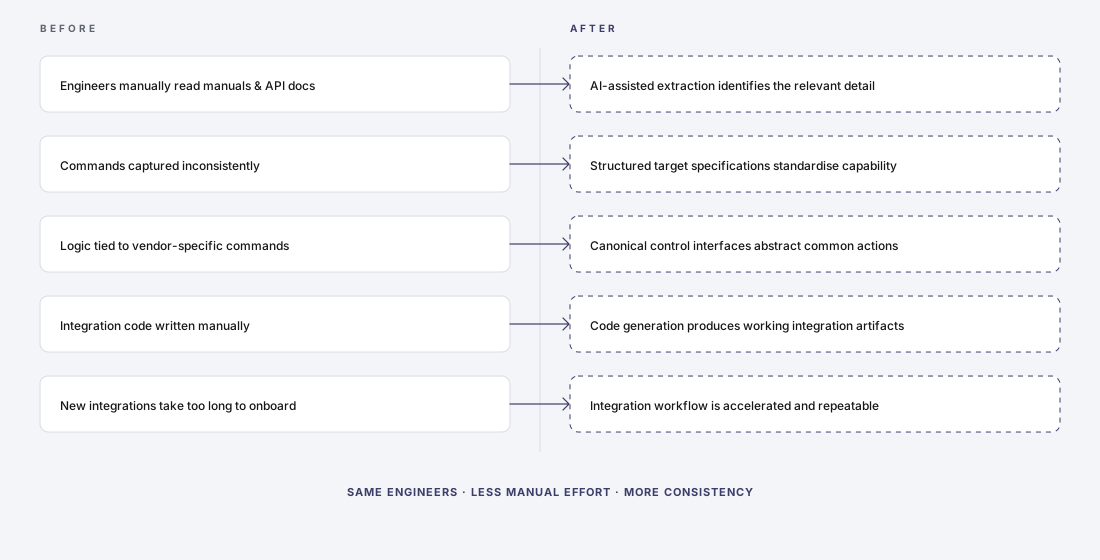
Device integration is detailed work. Engineers need to understand how a device connects, how it authenticates, which commands are available, what parameters are required, and how responses are structured. Across AV and UC ecosystems, that complexity increases quickly — different vendors use different protocols and command styles, and even when two devices support the same high-level action, the underlying implementation may be completely different.
Key pressure points
Engineers spend hours reading manuals and API docs for every new device
Commands and parameters mapped by hand, inconsistently across engineers
Applications tightly coupled to vendor-specific command implementations
Growing device ecosystems hard to onboard at the pace the roadmap demands
Key design constraints
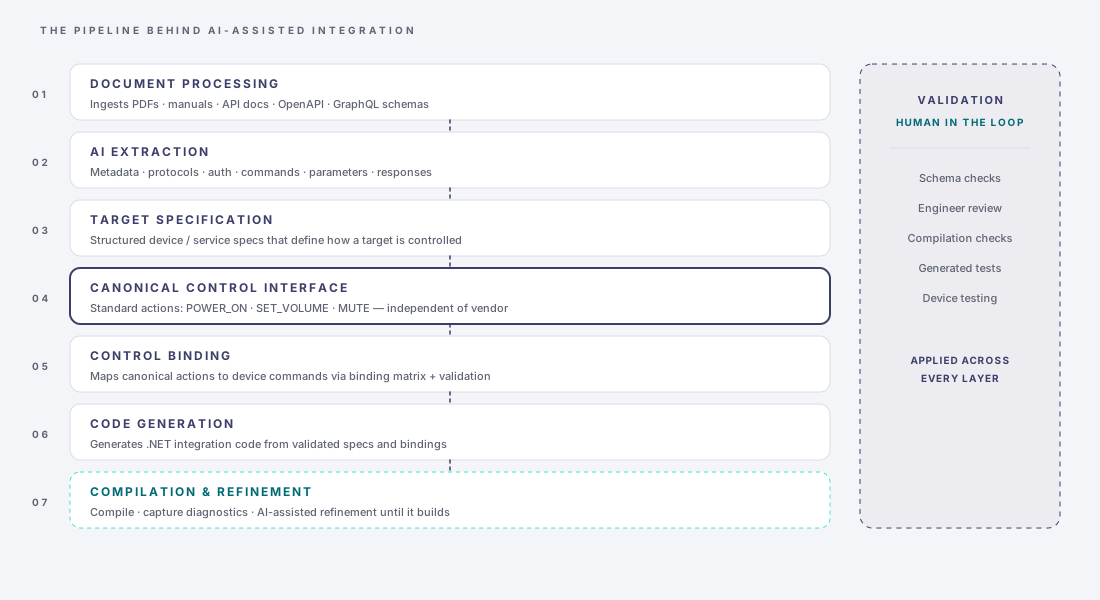
Documentation arrives in many formats: PDFs, API docs, OpenAPI and GraphQL schemas
AI-generated output must be reviewed by an engineer before it is used downstream
Generated code must compile and work against the target integration platform
The approach must support repeatable integration workflows, not one-off automation
Solution: AI-assisted extraction, mapping, and code generation.
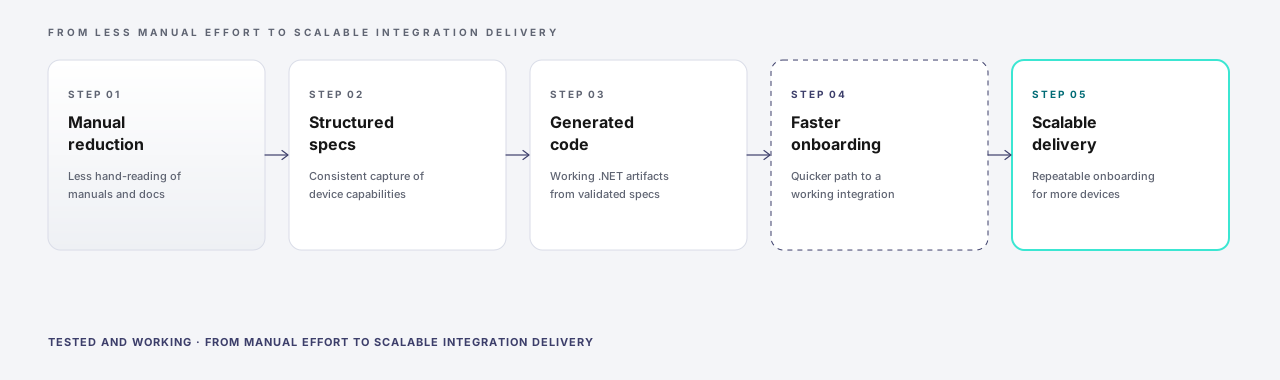
InspireX developed a system that uses AI to assist the integration workflow from documentation through to generated code. The process starts by ingesting technical documentation and extracting integration-relevant information — device metadata, connection methods, authentication, commands, parameters, and response structures. That detail is shaped into structured target specifications, then mapped to canonical control actions such as power, volume, and mute. Once specifications and bindings are approved, the system generates working integration code for the target control system's native tech stack, with compilation and validation ensuring the output is usable before it moves into integration testing.
Results: Faster integration with engineering control.
The accelerator was validated through a working documentation-to-code workflow, including structured specification review, code generation, compilation checks, and engineer approval before integration testing. It reduces the manual effort required to move from device documentation to working integration code — but the value is not just speed. The accelerator creates a more repeatable process, with structured specifications, standard control interfaces, traceability back to source documentation, and human review before code generation. Engineers can spend less time recreating integration patterns and more time validating behaviour, handling edge cases, and improving the platform.
Validated Outcomes: A faster, more repeatable integration workflow
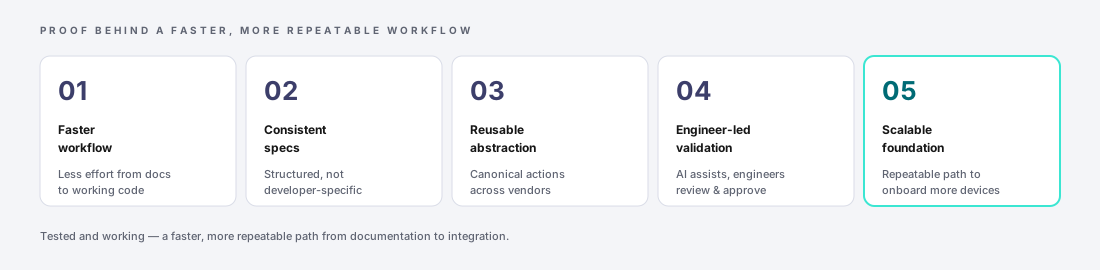
The accelerator delivers operational improvements across the integration workflow: less manual documentation review, more consistent device specifications, reusable control abstraction across vendors, and engineer-led validation at every stage. Together they make AI-assisted integration a practical path to onboarding more AV and UC devices — with technical oversight firmly in human hands.
Frequently Asked Questions
Can't find what you're looking for? Just send us a message.
What is an AI integration accelerator?
Does AI replace integration engineers?
What problem does this solve for AV and UC teams?
What are canonical control interfaces?
Need to Speed Up Device Integration for AV and UC Teams?
InspireX helps AV and UC teams build practical AI-assisted tools for software delivery, device control, and integration workflows. Let's talk about how we can help accelerate your integration roadmap.