
An AV hardware manufacturer needed a custom application suite that could support hardware-specific workflows, operating system constraints, client business systems, and third-party integrations across its product ecosystem. The software needed to align with operating system behaviour, board-level hardware constraints, client business systems, and selected third-party services.
This was not a standalone application build. It was a full product delivery challenge where software, hardware, user experience, testing, documentation, and launch planning all needed to move together.
InspireX delivered the project as a turnkey engagement, partnering closely with the client's technical teams and embedding into their operational workflow.
The project required a partner that could take responsibility for the full software lifecycle without fragmenting ownership across separate vendors or internal teams.
Hardware manufacturers often need software that feels simple to the user while handling complex product and system requirements behind the scenes.
In this case, the client needed an application suite that could support multiple user journeys, integrate with hardware-specific environments, and align with their technical and business objectives. The project required careful coordination across discovery, design, development, documentation, QA, and release.
If any part of the lifecycle became disconnected, the result could have created delays, usability issues, integration risk, or support challenges after launch. The client needed a partner that could take responsibility for the full software lifecycle while still collaborating closely with internal technical teams.
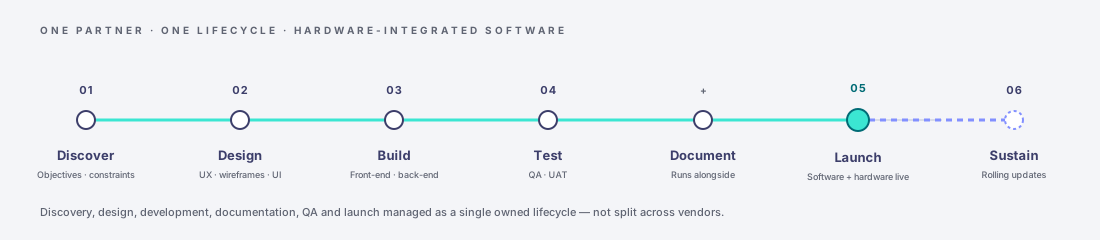
InspireX delivered a collaborative, iterative project that covered the complete software development lifecycle. The work began with discovery, user research, and design workshops to understand the product goals, user journeys, workflows, and technical environment.
From there, InspireX created wireframes, mockups, and a high-fidelity interface to support the different ways users would need to interact with the application. Project delivery was managed using Agile methods, including daily stand-ups, sprint planning, sprint reviews, and regular communication with the client's project manager.
On the engineering side, InspireX developed the application suite front end using React Native, including features such as user authentication and third-party application integration. The back end was developed using Node.js and MongoDB, with APIs integrated into the client's records system and other third-party services. Quality assurance was built into the project throughout, followed by user acceptance testing before launch.
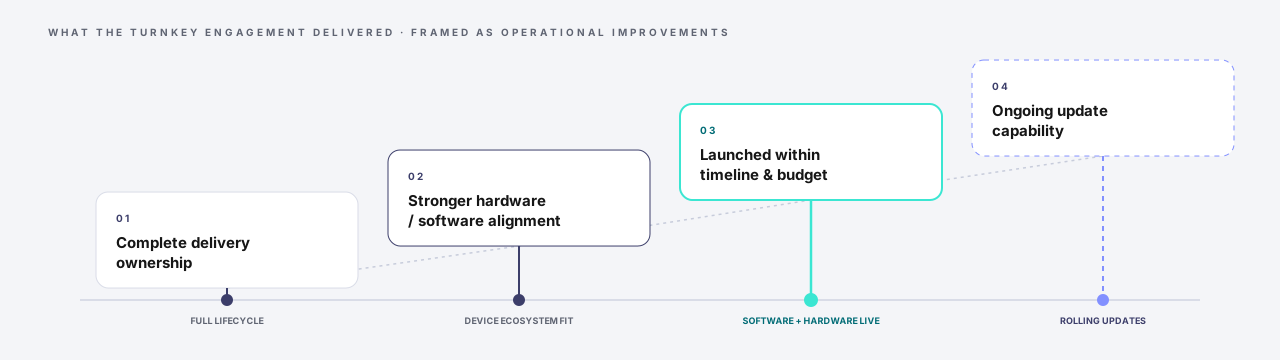
The software was delivered to the agreed project constraints and supported the client's hardware launch, with a rolling update model in place for future maintenance, enhancements, and support.
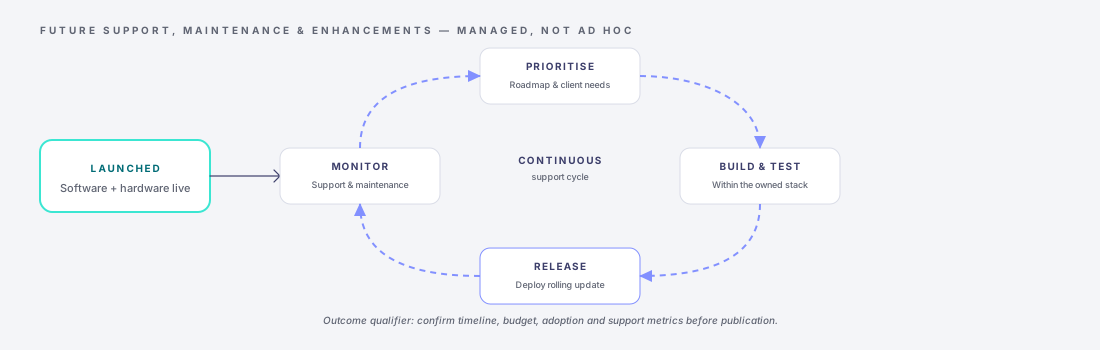
Together, these results gave the client one accountable partner across discovery, UX, engineering, documentation, QA, and launch, rather than fragmented ownership across vendors or internal teams. The application suite was built around the hardware ecosystem, operating environment, and integration requirements, so software and hardware could reach market as one product. The work was completed within the agreed timeline and budget, with a rolling feature update model in place so future maintenance, enhancements, and support can continue without rebuilding how delivery works.


InspireX Pty Ltd
Level 8
97 Creek Street
Brisbane City QLD 4000


